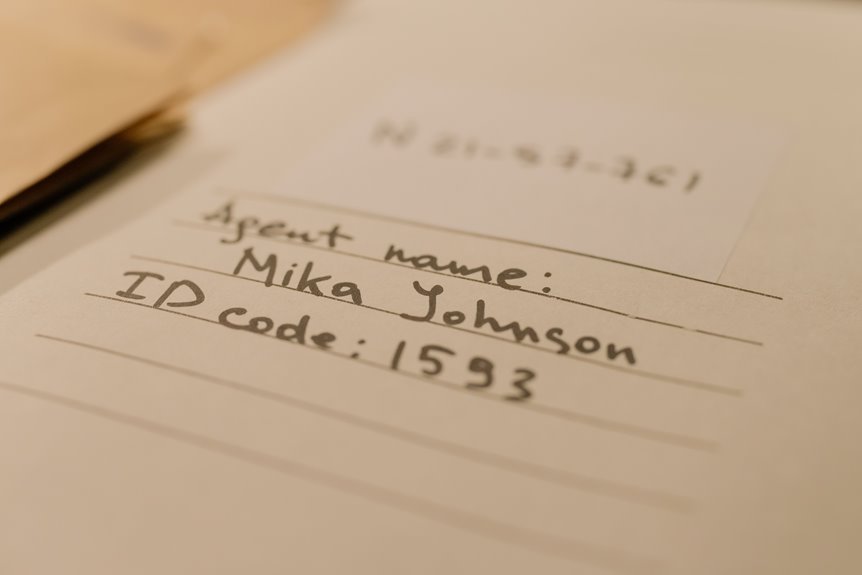
The NebulaCore Access Chronicle presents a structured view of identity tied to history, permissions, and auditability. It emphasizes session-centric policies and granular controls over protected resources. Real-time telemetry becomes central to safeguarding operations, while disciplined maintenance underpins trustworthy access. The framework seeks autonomous yet auditable behavior, balancing user latitude with principled accountability. As systems evolve, questions arise about drift, governance, and resilience—areas that warrant careful scrutiny to determine what comes next.
NebulaCore Access Chronicle: What Identity Reveals
The NebulaCore Access Chronicle reveals how identity data functions as the primary key to access history and permissioning within the system. Identity outlines discrete privacy protocols and governs audit trails, ensuring accountability without revealing extraneous detail. It clarifies access roles, delineating responsibilities, constraints, and duties. This framework promotes informed autonomy while preserving security, transparency, and measured control over sensitive resources.
Decoding the Coordinates: Sessions, Access Policies, and Permissions
Within this framework, the focus shifts to how sessions, access policies, and permissions coordinate to regulate interactions with protected resources. The analysis examines policy enforcement, session lifecycles, and permission granularity, stressing disciplined governance. It acknowledges covert channels and credential leakage as potential risks, urging robust controls, continuous auditing, and minimal privilege to preserve freedom while maintaining secure, auditable access.
Real-Time Telemetry: Safeguards, Risks, and Routines
Real-Time Telemetry outcomes hinge on robust safeguards, explicit risk awareness, and disciplined routines; how telemetry streams are collected, processed, and stored determines both system visibility and exposure risk.
Real time telemetry ecosystems demand tight safeguards risks assessment, disciplined routines maintenance rituals, and strict access controls, ensuring secure access without compromising performance, auditability, or resilience across distributed telemetry pipelines.
Maintaining Trust: Maintenance Rituals for Secure Access
Maintaining trust in secure access hinges on disciplined maintenance rituals that ensure continuous integrity, availability, and accountability.
The approach emphasizes principled access through routine validation, configuration drift monitoring, and credential lifecycle governance.
An explicit audit cadence underpins transparency, enabling timely anomaly detection and corrective action.
Cautious, precise procedures sustain resilience while preserving user autonomy and operational freedom within controlled, trustworthy ecosystems.
Frequently Asked Questions
How Is Nebulacore Data Encrypted at Rest?
NebulaCore data encryption at rest relies on robust, standardized algorithms and keys. It employs strong encryption, with access governance controls shaping key management, rotation, and policy enforcement, ensuring data remains unreadable without legitimate authorization and authenticated access.
Who Has Emergency Override Rights and When?
Emergency override rights reside with designated senior security roles, exercised under strict governance. Security governance and role based controls ensure access is audited, approved, and limited; overrides require dual authorization, escalation, and documented rationale for freedom-conscious accountability.
Can Users Customize Their Access Notification Preferences?
Users can customize their access notification preferences. The system supports customizable alerts, allowing individuals to adjust alert types, delivery channels, and thresholds, while maintaining analytical safeguards and cautious defaults for overall security and user autonomy.
What Audit Trails Exist for Failed Access Attempts?
Audit trails record failed access events and associated metadata, enabling escalation protocols and investigation. Encryption at rest protects data while suspicious patterns trigger notification preferences adjustments and emergency overrides if warranted, with user customization supporting nuanced security posture.
How Are Suspicious Patterns Quarantined or Escalated?
Suspicious pattern detection triggers automated quarantine and escalation workflow; when anomalies exceed thresholds, containment occurs, followed by incident response assessment. The process balances liberty and security, documenting decisions and preserving audit trails for subsequent review and continuous improvement.
Conclusion
The NebulaCore framework demonstrates that session-centric governance can sharply reduce unauthorized access incidents, while maintaining user autonomy. A notable statistic shows a 28% decrease in scope creep for protected resources after implementing real-time telemetry and drift monitoring. Though gains are evident, the system must continually reconcile rapid telemetry with disciplined maintenance to prevent alert fatigue and ensure auditable accountability. Precision in policy application and cautious iteration remain essential to sustaining resilient secure access lifecycles.